
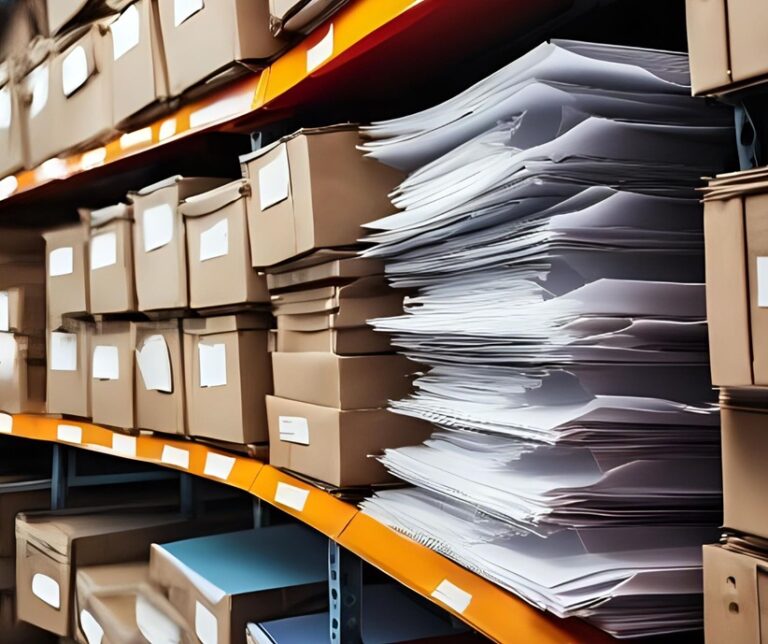
In many established law firms, physical archives tend to grow quietly over time. What begins as several filing cabinets for active matters can eventually evolve into dedicated storage rooms filled with years of accumulated case files, correspondence and administrative records.
For most firms, this happens gradually over years of retained files and evolving administrative practices. Over time, archive rooms become an accepted part of office operations without a full reassessment of their long-term operational impact.
While physical records remain important in legal practice, maintaining large inactive archives also carries indirect costs that are often underestimated.
When Archive Space Starts Competing With Working Space
Office space today is significantly more valuable than it was a decade ago. Yet in many firms, valuable internal space continues to be allocated to inactive files that no longer require regular access.
Storage rooms, boxed documents, and old filing systems often occupy areas that could otherwise support:
- meeting rooms,
- additional workstations,
- or future expansion.
As firms grow, physical archives can gradually evolve from a working resource into an operational burden.
The Less Visible Cost: Administrative Burden
The true cost of maintaining large archives is not limited to rental space alone.
As document volumes increase, firms may also experience:
- slower retrieval of older records,
- duplicate storage,
- inconsistent filing accumulated over years,
- and increased administrative handling.
Retaining records has limited operational value if documents cannot be quickly and accurately retrieved when needed. As archives expand without structured lifecycle management, information accessibility itself can become less efficient.
From File Storage to Information Management
Modern records management increasingly focuses not only on retaining documents, but also on how information is organised, accessed and eventually dispositioned throughout its lifecycle.
As firms adopt digital workflows and hybrid working practices, many are reassessing the role of long-term physical archives within daily operations.
The objective is not necessarily to eliminate physical records entirely, but rather to manage inactive information more strategically and efficiently.
Archive Reduction as Part of Office Optimisation
Increasingly, firms are conducting periodic archive reviews as part of broader office optimisation initiatives.
These exercises may include:
- consolidating inactive files,
- reorganising archive rooms,
- digitising selected records,
- or securely disposing documents that no longer require retention.
For firms managing large volumes of inactive records, professional secure document shredding and off-site shredding services are increasingly becoming part of broader office optimisation and records management initiatives. Archive reduction exercises can help improve workspace efficiency while reducing the ongoing burden of maintaining excessive physical storage.
Modern records management practices increasingly emphasise not only retention, but also accessibility, lifecycle control and responsible disposition of inactive records.
Modern records management practices increasingly emphasise not only retention, but also accessibility, lifecycle control and responsible disposition of inactive records, which are core principles commonly discussed within records management frameworks.
For firms reviewing inactive archives, secure document disposal is often part of broader office optimisation and records management initiatives. Our services include: